
Introduction
This reflective journal builds upon the feedback received from my first reflective submission and aims to further enhance my reflective practice by critically examining my learning experiences and creative development. The feedback from Module 1 highlighted several strengths in my approach, including clear and well-visualised planning, thoughtful application of project management methods, and effective evaluation of emerging technologies relevant to my project. My use of project management platforms and structured planning techniques was deemed suitable and aligned with industry expectations.
Additionally, my reflections demonstrated a strong ability to analyse and evaluate my experiences using established reflective models. I was commended for employing detailed and insightful problem-solving strategies during the planning of my creative outputs, which showcased my analytical thinking and capacity for developing effective solutions. My production management techniques were also clearly presented and thoughtfully analysed.
Moreover, the feedback acknowledged my leadership and collaboration skills, particularly in structuring team roles and responsibilities. I communicated my digital content creation strategies fluently, supporting them with relevant research and a sound understanding of current industry trends.
In my initial reflective work, I primarily used Gibbs’ Reflective Cycle, which provided a structured, step-by-step framework that helped break down experiences into description, feelings, evaluation, analysis, conclusions, and an action plan. While this model was effective in encouraging systematic reflection, it often centred more on the personal and emotional aspects of experience and could feel repetitive at times.
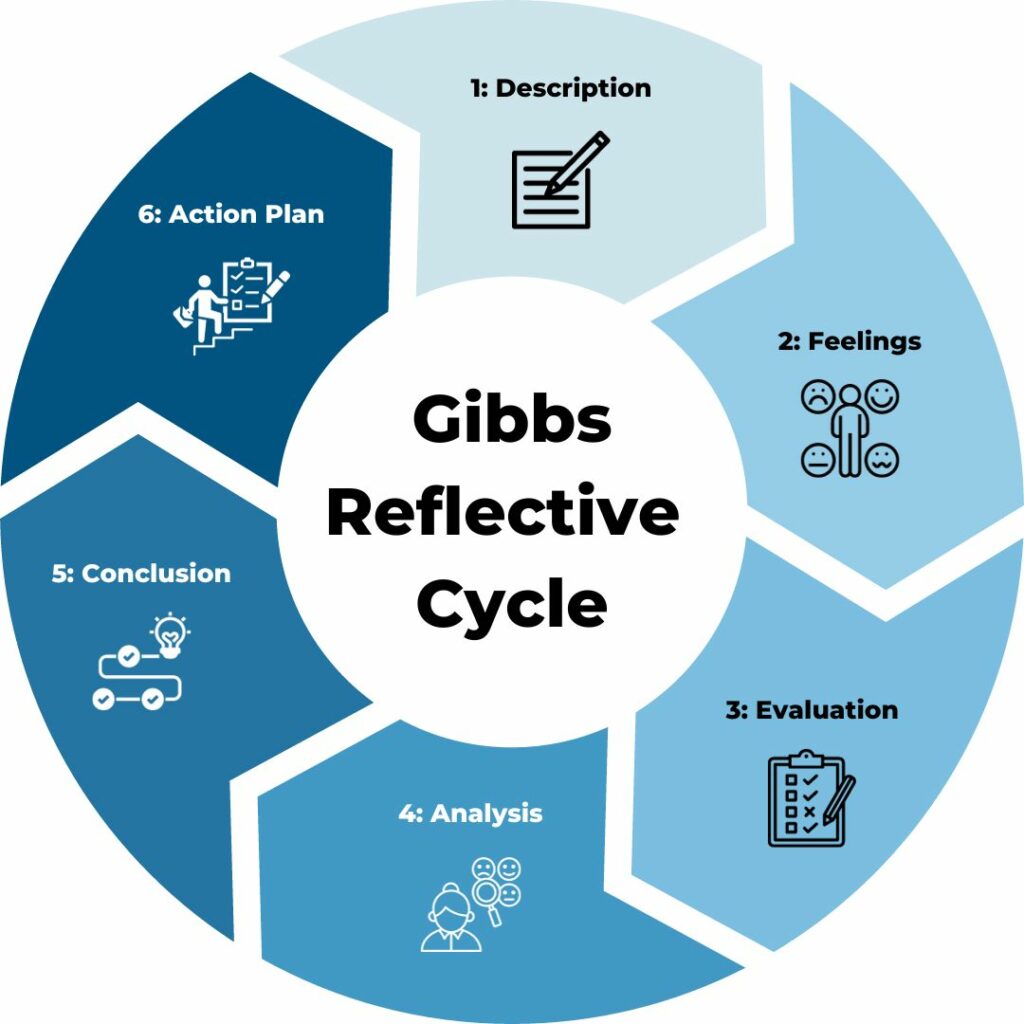
For this reflective journal, I have chosen to adopt Kolb’s Experiential Learning Cycle, which offers a more dynamic and iterative approach. Kolb’s model moves beyond self-reflection by integrating four stages—concrete experience, reflective observation, abstract conceptualisation, and active experimentation. This process not only encourages reflection but also emphasizes learning through doing and testing out new approaches. I believe this model is particularly well-suited to my creative practice, especially in the context of my CGI project, where I continually refine techniques through trial and error.
By applying Kolb’s framework, I aim to deepen my reflection, better connect theory with practice, and further enhance my ability to adapt and evolve throughout the development of my project.

Topic 1: Planning / Project Management of Digital Online Content
Following Kolb’s Experiential Learning Cycle, I have reflected on the practical processes and learning experiences involved in the planning and management of my digital content project. This section focuses on how I developed and applied project management strategies to ensure an efficient and creative production process.
Concrete Experience
At this point in the project, I have completed the live-action filming and created the initial 3D model of a giant highlighter using Blender. Although the full CGI integration is still underway, the planning and organisation required to reach this stage were extensive. I began by using Meta Business Suite to map out a publishing timeline for social media content related to the project. This allowed me to visualise how and when the different elements—behind-the-scenes clips, development updates, and final edits—would be shared. Scheduling posts in advance gave me a clearer sense of how the project would unfold publicly and helped me manage time more efficiently.
Internally, I relied heavily on Notion to manage tasks, deadlines, and creative documentation. I created a dedicated workspace to break the project down into phases: pre-production, filming, asset creation, and post-production. Using Notion allowed me to track progress in real time and ensured I remained focused on key deliverables without becoming overwhelmed by the complexity of the project.
A particularly valuable part of this phase was learning how to create a call sheet, something I hadn’t done in detail before. I developed this document to structure the filming day, outlining crew roles, the location schedule, health and safety considerations, and scene timings. Sharing this with my collaborators—friends who volunteered to appear in the video—was key to communicating my vision clearly. It also helped them understand how their movements and actions needed to align with the CGI elements that would be added later.
During the shoot, I directed their performances to ensure their actions would interact believably with the CGI highlighter. This required careful planning of camera angles, timing, and physical positioning, especially since the highlighter doesn’t yet exist in the real world. I also made notes on lighting and object shadows so that, later in post-production, the CGI would match the natural environment as closely as possible.
Reflective Observation
Looking back on this stage, I’ve realised how important detailed planning is in bridging the gap between creative vision and practical execution. Without clear communication tools like the call sheet, it would have been difficult to coordinate a team that had limited experience with green screen acting or digital compositing. The use of project management platforms gave me the structure I needed to lead the production confidently, even with the added challenge of preparing for CGI that hadn’t yet been completed.
Another important insight was the value of visualising the final product before it exists. Since I couldn’t show my team what the CGI would look like during the shoot, I had to describe it clearly, using references and rough sketches. This experience highlighted the importance of pre-visualisation and reinforced the need to plan not just for what is happening in the moment, but for what will happen later in post-production.
Abstract Conceptualisation
Through this process, I’ve come to understand planning not just as a logistical necessity, but as a creative strategy. By breaking down the project into clear stages and assigning tools and resources to each, I created a flexible but focused workflow. The use of Meta Business Suite reflected an understanding of digital content as a lifecycle—one that involves audience engagement planning as much as production. Notion acted as a tool for internal alignment, allowing me to develop my own adaptable project management system tailored to the needs of a hybrid video/CGI production.
This experience connects to broader project management theories around agile workflows and production pipelines, where flexibility and communication are key. The call sheet and filming plan could be seen as a type of sprint within an agile process, where a defined goal (capture footage for CGI integration) is accomplished with a short, focused effort and reviewed before moving to the next stage (CGI rendering).
Active Experimentation
Looking ahead, I intend to refine these planning strategies further in future projects. I plan to incorporate more visual planning tools, such as storyboards and animatics, to better communicate scenes that involve CGI or complex post-production. Once I begin the CGI rendering and editing phase, I expect new challenges will emerge—particularly around synchronising motion, lighting, and continuity between the real footage and the digital elements. I will continue applying Kolb’s cycle throughout that phase, reflecting on each trial, analysing outcomes, and making adjustments.
So far, this project has taught me that effective planning is not just about meeting deadlines—it’s about creating the right conditions for creativity to flourish. With each new step, I’ve grown more confident in my ability to manage both the creative and logistical demands of digital content production.
Topic 2: Skills Development (Technical and Durable)
Throughout this module, I have significantly developed both technical and durable (transferable) skills. These have emerged not only through the practical work involved in the CGI Giant Highlighter Project, but also through opportunities like presenting at Creative Conscience, building my personal website, and attending Mac’s workshops on Blender and After Effects.
Concrete Experience
From a technical perspective, the CGI Giant Highlighter Project pushed me to expand my creative and software-based skillset. I worked primarily in Premiere Pro and Blender, experimenting with modeling, lighting, materials, and rendering to bring a stylised highlighter to life. I had no team behind me—this was a self-managed process, which demanded strong creative independence and technical initiative. Every element, from initial concept art to refining the 3D model, was developed through trial and error. When issues arose—such as object clipping, texture distortion, or render glitches—I researched solutions, tested multiple fixes, and iterated until the outcome met my expectations.
In parallel, I attended Mac’s workshops, which offered valuable insights into advanced tools like After Effects and Blender. These sessions deepened my understanding of animation principles and motion design. I applied many of these techniques directly into my CGI workflow, from animating smooth object transitions to incorporating motion blur and camera tracking.

1st draft of CGI animated object in Blender
Another key learning experience was developing a poetic and observational video, which helped me explore a more reflective and visual approach to storytelling. This process required me to pay close attention to framing, light, camera movement, and pacing. Without relying on dialogue or narration, I had to communicate mood and narrative through visual composition alone. This significantly strengthened my filming techniques, particularly in terms of capturing emotion, atmosphere, and meaning in subtle ways. It also improved my patience and awareness behind the camera—skills that later became useful during the filming stage of my CGI project.
In addition, I developed my personal website, which taught me how to think like both a designer and a digital storyteller. Structuring pages, curating content, and optimising user experience required a blend of aesthetic judgment and technical understanding. The site became a platform for showcasing my projects and articulating my creative identity.
Durable skills were just as critical to my progress. My experience working independently taught me creative problem-solving, time management, and resilience. I developed a routine and project timeline in Notion, managed my own deadlines, and adapted my process based on new insights and challenges. Directing my friends during the live-action filming also allowed me to develop communication and leadership skills. Although they were not trained actors or filmmakers, I guided their actions clearly so that their movements would align naturally with the CGI elements in post-production.
Presenting at Creative Conscience gave me the opportunity to articulate my creative process and explain the significance of my work to an audience. This refined my public speaking and storytelling abilities, and helped me realise the importance of communicating complex ideas in an engaging, relatable way.

Creative Conscience event
Reflective Observation
Reflecting on these experiences, I see how my technical skillset has expanded in ways that feel both practical and deeply creative. I’m no longer just using software—I’m designing systems, solving problems, and building digital narratives. Working independently gave me space to experiment, but also required discipline and self-critique. I constantly reviewed my progress, recognised flaws in my approach, and reworked ideas when necessary.
I also recognised how much growth can occur outside of solitary creation. By working with friends and presenting publicly, I had to translate my technical vision into accessible language. This helped me become more self-aware about how I communicate and how collaboration—even with non-experts—can enhance the creative process.
Abstract Conceptualisation
From these experiences, I’ve come to understand skills development as a continuous process of iteration, reflection, and adaptation. Using Kolb’s model, I realised that my most meaningful learning came not from mastering a tool, but from engaging with problems creatively and persistently. I’ve learned that creativity and technical skills are deeply interconnected—my ability to troubleshoot render issues, for instance, is directly linked to my creative ability to rethink scenes or compositions on the fly.
Attending Mac’s workshops helped reinforce the idea that structured learning environments can complement self-directed exploration. Combining expert guidance with personal experimentation gave me a more well-rounded foundation in motion design and animation principles.
Active Experimentation
Moving forward, I aim to continue balancing independent work with collaborative opportunities. I want to keep refining my CGI and post-production abilities, especially in areas like compositing, motion tracking, and color grading. In particular, I’ve identified the need to improve my design and editing skills in both Blender and Premiere Pro. While I’ve been able to achieve a functional level of output in these tools, I recognise that there is a lot more I can do creatively and technically to elevate the quality of my work. Enhancing my proficiency in Blender will allow for more detailed and expressive 3D modeling and animation, while better editing techniques in Premiere Pro will help me craft more seamless and professional final videos.
Additionally, I will continue to present my work publicly—whether online, at events, or through my website—as these opportunities strengthen my confidence, professional voice, and ability to receive and respond to feedback.
Ultimately, this phase of the project has taught me that developing both technical and durable skills isn’t a one-time effort—it’s an ongoing, evolving cycle of trying, reflecting, learning, and improving. The challenges I faced were not setbacks, but catalysts for creative growth, pushing me toward becoming a more capable and confident digital content creator.
Topic 3: Emerging Tech and Innovation
As part of my ongoing development in digital content creation, I’ve had the opportunity to explore a wide range of emerging technologies, tools, and workflows. These experiences have given me practical insights into how innovative tech can enhance storytelling and audience engagement in modern content production.
Concrete Experience
During the module, I engaged in hands-on activities that introduced me to several emerging content formats. I learned about the equipment and setup required to produce both a podcast and a vodcast, including the use of microphones, soundproofing tools, camera setups, and lighting to ensure professional-quality audio and video output. In a practical session, I collaborated with classmates to record a podcast, using a Blackmagic camera to capture high-quality footage while also managing audio levels and directing the conversation.
I also gained experience in live streaming using OBS Studio, which taught me how to create scenes, add overlays, manage transitions, and stream to platforms like YouTube or Twitch. Understanding how to control these elements in real time gave me insight into the growing demand for interactive and spontaneous digital content, and how creators can build stronger engagement with audiences through live formats.

Recording a podcast
In addition, I experimented with 360-degree video editing, which introduced me to a new form of immersive storytelling. Learning how to edit in a 360 environment forced me to think differently about composition and pacing. Unlike traditional video, where the viewer’s perspective is controlled, 360 content requires careful attention to all angles and visual balance. This process challenged my spatial awareness and improved my ability to work with alternative media formats.

Editing a 360 video
I also continued using Blender to develop the 3D model for my CGI Giant Highlighter project. The process of modeling, animating, and refining the visual look of the object gave me a deeper appreciation of how powerful open-source tools like Blender can be when integrated into a broader digital workflow. The flexibility of Blender allowed me to experiment with materials, lighting, and rendering methods—pushing me to think more innovatively about how 3D elements can be used in hybrid video formats.
Reflective Observation
Reflecting on these experiences, I realized how each piece of emerging tech offers unique creative possibilities—but also comes with its own learning curve. The podcast and vodcast sessions helped me understand the importance of audio quality and multi-camera setups, which are often underestimated in digital content creation. Similarly, learning how to stream with OBS taught me how much preparation and live coordination goes into successful broadcasts, especially when juggling multiple scenes and overlays.
The 360 video editing challenged my typical approach to storytelling. It made me more aware of the viewer’s autonomy in navigating visual content, and I began to think about how to guide attention without a fixed frame. This forced me to adopt a more holistic and intentional design approach.
Returning to Blender, I also became more aware of its limitations as well as its strengths. While the platform is powerful, I found that there are still areas—like real-time rendering or complex texture workflows—that I need to improve on. However, its open-ended nature makes it an ideal tool for continued experimentation and creative exploration.
Abstract Conceptualisation
Through these experiences, I’ve come to understand that innovation in content creation is not just about mastering the newest tools—it’s about adapting to unfamiliar formats, embracing experimentation, and learning to think from the perspective of the user or audience. Whether it’s making content for VR headsets, live audiences, or traditional screens, each platform has unique demands and creative opportunities. Working across different technologies has taught me to be more flexible in my thinking and more strategic in how I plan and execute my content.
I also realized that many of these tools—Blender, OBS, 360 editors—are free or accessible, which democratizes innovation and puts creative power into the hands of individuals and small teams. This aligns closely with the independent nature of my own work, reinforcing my belief that innovation isn’t just about scale or resources, but about creativity and initiative.
Active Experimentation
Moving forward, I plan to continue exploring immersive and interactive media, such as expanding on my experience with 360-degree content and possibly incorporating CGI elements into VR spaces using Blender. I would also like to improve my ability to use OBS Studio more dynamically, perhaps by incorporating live animation or audience interaction features in real-time streams.
In terms of audio-visual production, I aim to build on the podcast and vodcast experience by developing my own short-form vodcast series, which could serve as a platform to share my creative process or spotlight other digital artists. This would allow me to practice multicam editing, audio mastering, and on-camera presentation, which are increasingly important in digital content careers.
Finally, I plan to strengthen my skills in Blender, particularly in animation and compositing, and deepen my knowledge of Premiere Pro to ensure that my editing techniques match the complexity and creativity of the assets I’m creating. These tools will remain central to my workflow as I continue pushing my creative boundaries.
Conclusion
Reflecting on my journey throughout this module using Kolb’s Experiential Learning Cycle has helped me better understand the depth and growth of my creative and technical practice. Each project and hands-on session allowed me to move through the stages of experience, reflection, conceptualisation, and experimentation—reinforcing not only my confidence as a digital content creator but also my adaptability in navigating emerging tools and platforms.
Through planning and project management, I developed strategies for effective time management and communication, learning to coordinate with others while maintaining creative direction. In terms of skill development, I grew significantly in both technical and durable areas—learning to work independently, solve problems creatively, and direct others effectively. The integration of CGI in my project, my involvement in collaborative production, and the use of tools like Blender, OBS Studio, and 360 video editors have all contributed to a more sophisticated and multifaceted creative practice.
Importantly, exploring emerging technologies has opened my eyes to future possibilities in digital storytelling—from immersive media to real-time streaming. It also highlighted areas I need to continue improving, particularly in Blender and Premiere Pro, where I aim to elevate both my design precision and editing fluency.
This reflective process has ultimately shown me that learning is never linear; it’s a cycle of building, breaking, and rebuilding ideas. I now feel more prepared to tackle future projects with confidence, creativity, and a deeper understanding of my own learning and working style.
References
Blender Foundation (no date) Blender. Available at: https://www.blender.org/ (Accessed: 20 April 2025).
Creative Conscience (no date) Creative Conscience Awards. Available at: https://www.creative-conscience.org.uk/ (Accessed: 20 April 2025).
Gibbs, G. (1988) Learning by Doing: A Guide to Teaching and Learning Methods. Oxford: Oxford Polytechnic.
Kolb, D.A. (1984) Experiential Learning: Experience as the Source of Learning and Development. Englewood Cliffs, NJ: Prentice Hall.
OBS Studio (no date) Open Broadcaster Software. Available at: https://obsproject.com/ (Accessed: 20 April 2025).
